



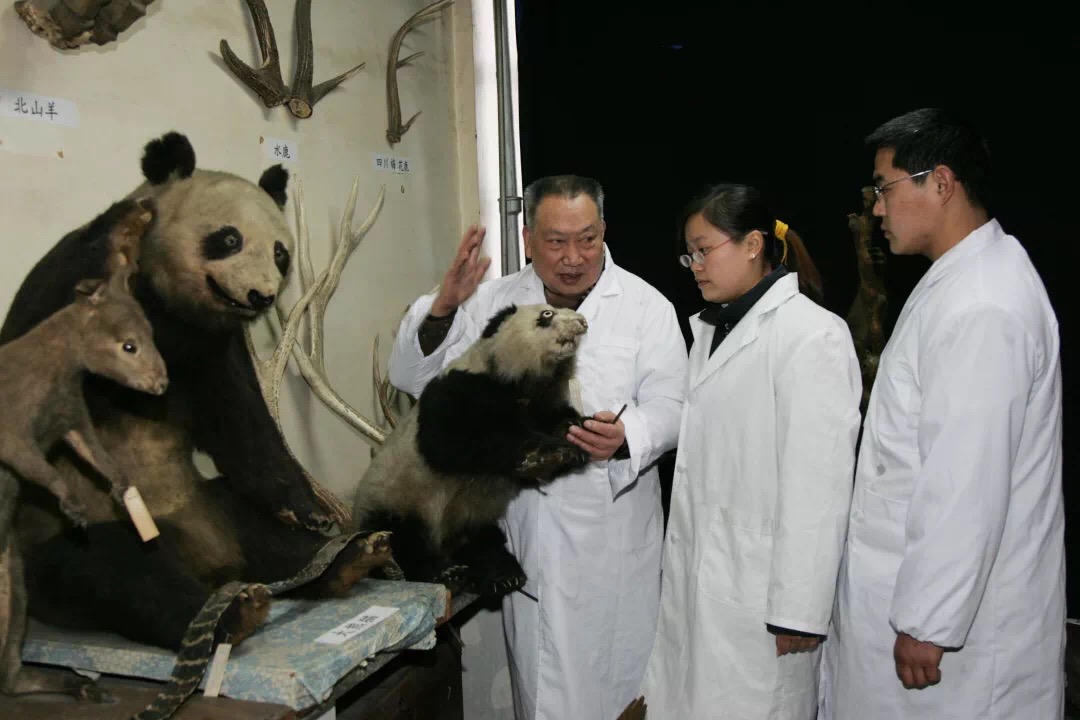
Hu Jinchu teaches in a class. (Photo provided to Xinhua)
Meet "panda papa" -- Hu Jinchu, 90, who has spent 45 years on the research and conservation of giant pandas in China.
CHENGDU, Oct. 25 (Xinhua) -- Every morning, students at Xihua Normal University in southwestern China's Sichuan Province see a tall, silver-haired old man doing Taiji on the tranquil campus.
Lauded the "panda papa," the retired professor, Hu Jinchu, is very well-known to the students.
In September, 90-year-old Hu, along with three others, received lifetime achievement awards for their unrelenting efforts and outstanding achievements in the scientific research and conservation of giant pandas.
The award was launched this year by the Sichuan Provincial Bureau of Forestry and Grassland, the World Wide Fund for Nature as well as other institutions, as China marks the 150th anniversary of the scientific discovery of giant pandas.
"We believe that protecting pandas is protecting ourselves," said Hu, who has spent 45 years on the research and conservation of giant pandas in China.
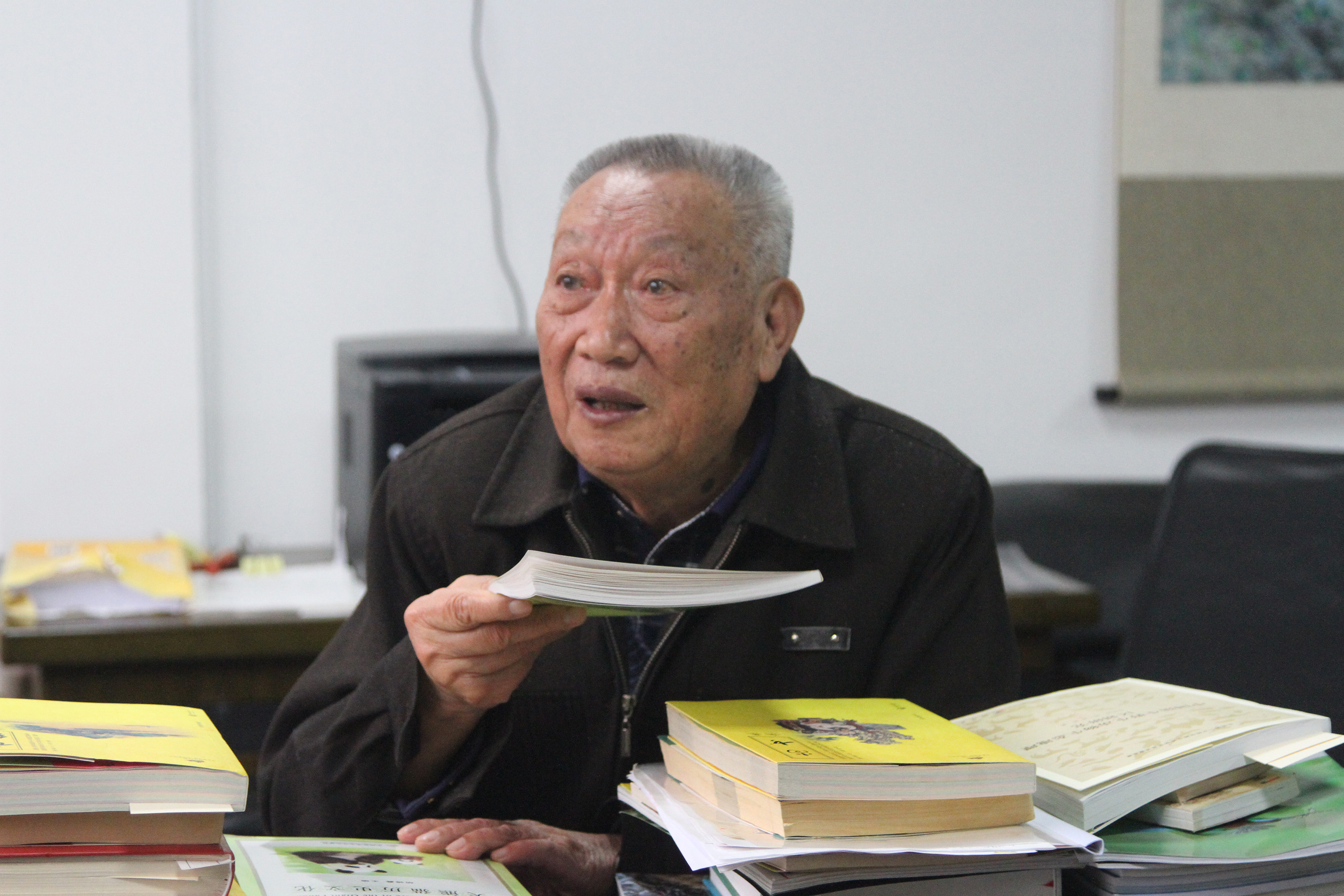
Hu Jinchu displays his books on giant panda research on March 4, 2019. (Photo by Liu Yanping)
Dating back to the early 1970s, as the only habitat of giant pandas in the world, China did not have much reliable and detailed information on the distribution, number and reproduction of its national treasure.
A provincial investigation team was then set up in 1974 in Sichuan, the "home of giant pandas," to get a clear picture of the living situations of the endangered creature in its major habitats in Sichuan, Shaanxi and Gansu provinces.
Hu, who was already a famous zoologist, was appointed to lead the investigation team. Since then, the pioneer devoted his later life to the study of the species.
He came up with one method to simulate the pandas' daily actions through their tracks before scientists from home and abroad were able to begin observational studies of pandas in 1978.
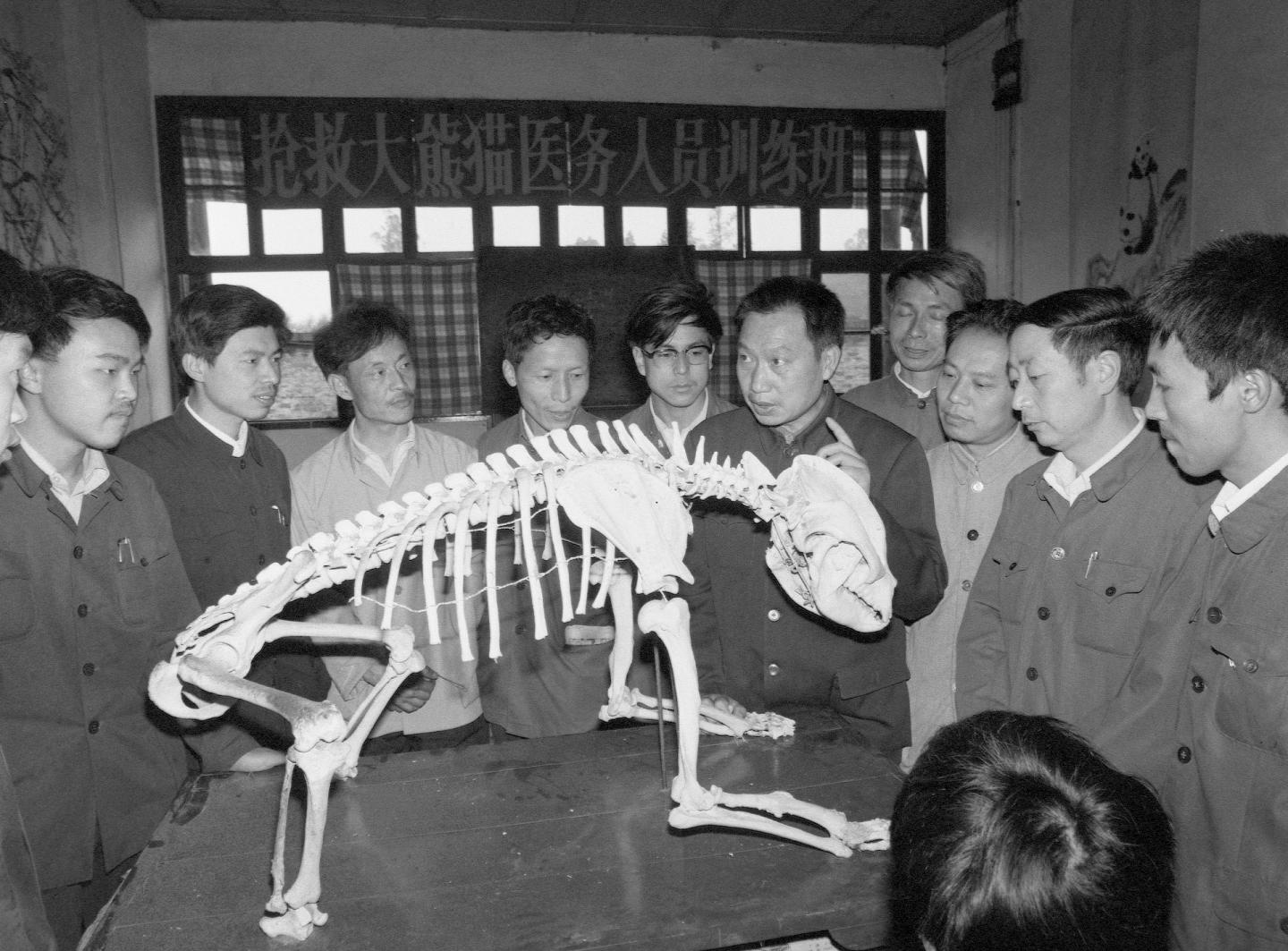
Photo taken in 1984 shows Hu Jinchu (M) offers training to local doctors based in 17 counties and districts in the habitat of giant pandas so that they can give first-aid to pandas in need. (Xinhua/Jin Xuqi)
According to Hu, each giant panda has different chewing habits, which means the length, thickness and chewing degree of bamboo residue vary accordingly. Therefore, researchers could obtain information on the number, age and activity range of giant pandas by comparing bamboo residue.
The method, which was named after Hu later, proved to be very helpful in studying the living situations of the wild giant panda.
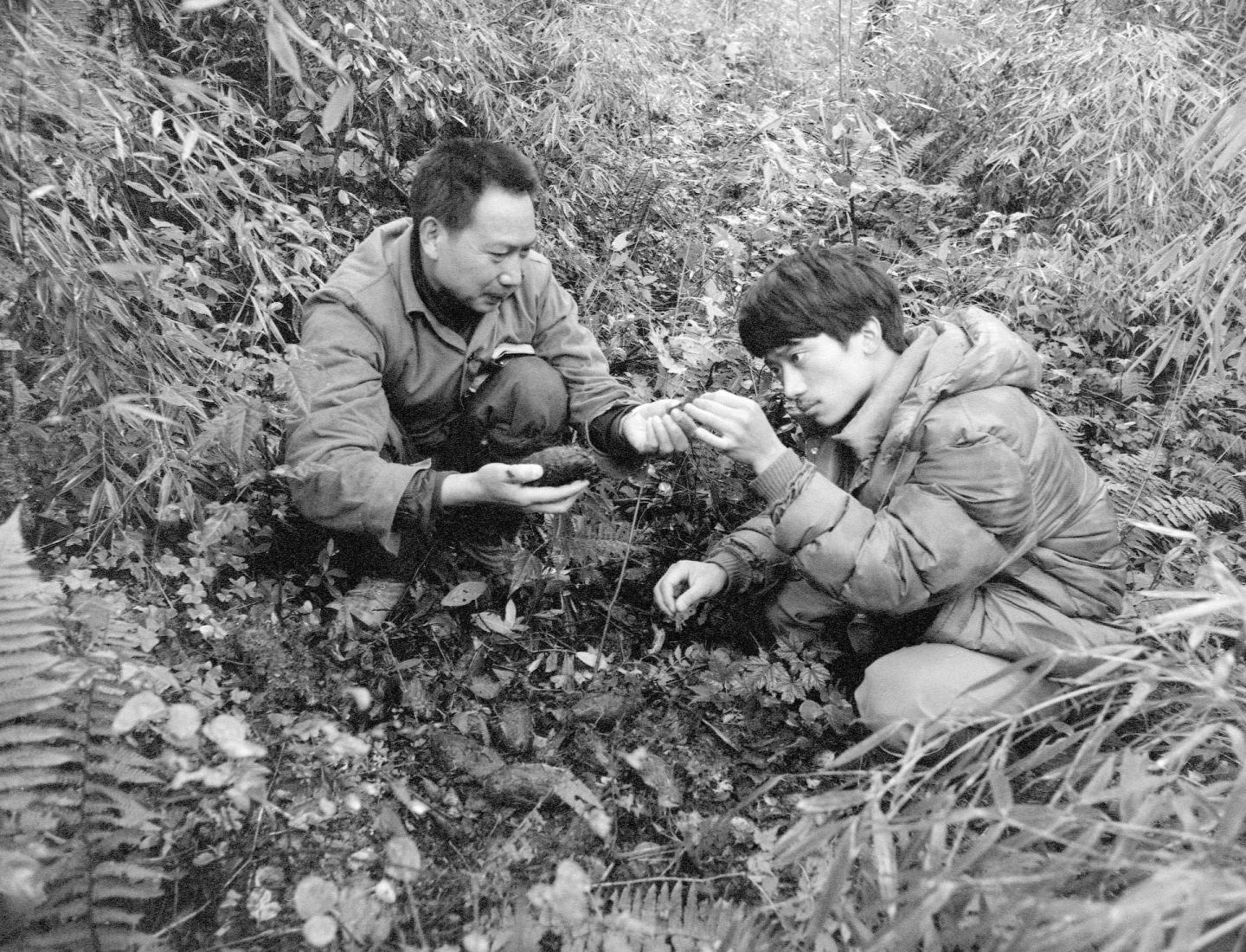
Photo taken in 1983 shows Hu Jinchu (L) studies pandas' waste in the wild. (Xinhua/Jin Xuqi)
After four and a half years of arduous field investigation, the pioneering team travelled a total of 90,000 kilometers and finally completed a report of more than 200,000 words detailing the species' living status in Sichuan.
After the report was released, Sichuan authorities enhanced measures to better protect the endangered species. The province expanded the Wolong National Nature Reserve to 200,000 hectares and approved the establishment of six more national nature reserves.
Hu did not stop making efforts for the panda conservation. In 1978, he led the establishment of the world's first giant panda field ecological observation station in Wolong.
"Through deeper observations and researches at the station, we have a further understanding on the living and breeding habits of wild giant pandas," said Hu.
American zoologist George Schaller who was also awarded the lifetime achievement award spoke highly of Hu's work.
"Hu contributed greatly to China's huge achievements in the giant panda conservation," Schaller said.
In 2016, the International Union for Conservation of Nature downgraded the giant panda from "endangered" to "vulnerable" on the global list of species at risk of extinction thanks to China's decades of efforts.
Currently, fewer than 2,000 pandas live in the wild, mostly in Sichuan and Shaanxi.
"Research on giant pandas is one mission that the era gifts. We should work hard on it," Hu said. ■
