




* Due to the ongoing trade tensions that Washington initiated with Beijing more than a year ago, Mortillaro is now back to where he was by losing his promising Chinese business as the U.S. lobster industry is bogged down by extra tariffs.
* "We're in a situation as all other American companies are. We are all looking for alternative buyers and we are beating ourselves to death...Who's ever going to get the business is the cheaper price."
* Maine's lobster exports to China have subsequently plunged 84 percent since China was forced to impose retaliatory tariffs, data released by the Maine International Trade Center earlier this year showed.
*While the short-term impact is already difficult to endure, many U.S. lobster dealers, including Mortillaro, are worried that their former Chinese customers have forged new business relationships with Canadian lobster dealers and that they would lose their business with China in the long term if not permanently.
by Xinhua writers Sun Ding, Hu Yousong
GLOUCESTER, the United States, July 28 (Xinhua) -- Good wine needs no bush. If you have good lobsters, buyers -- even from the other side of the planet -- will find ways reaching out to you.
This was the case for U.S. lobster dealer Vince Mortillaro as Chinese buyers were easily impressed by the fine quality of his live lobsters. The Gloucester, Massachusetts-based family business experienced a strong boost in sales when it started conducting business with China, one of the world's largest lobster markets.
However, due to the ongoing trade tensions that Washington initiated with Beijing more than a year ago, Mortillaro is now back to where he was by losing his promising Chinese business as the U.S. lobster industry is bogged down by extra tariffs.
As U.S. and Chinese trade officials are returning back to the negotiation table on Tuesday, Mortillaro is eager to see an early end to the trade tensions and his business with China go "back to normal."

A worker sorts lobsters by size at Maine Coast Lobster Company in York, Maine, the United States, June 26, 2018. (Xinhua/Zhang Mocheng)
TOUGH SITUATION
In July 2018, the United States unilaterally imposed additional tariffs on a group of Chinese imports, initiating widely-unexpected trade disputes with China, and jeopardizing a wide range of industries which have been nourished by trade contacts between the world's two largest economies.
"In China, we can't get any business," Mortillaro told Xinhua in a recent interview.
Mortillaro used to ship lobsters regularly to major Chinese cities including Beijing, Shanghai and Guangzhou in the past five years but hasn't been able to in 2019 because Canadian shippers are gaining more price advantages in the competition to woo Chinese customers.
"Canada only has a 7-percent tariff," he said, adding that it is very hard to compete with Canadian exporters under this circumstance since the tariff on U.S. lobsters has been raised to 32 percent due to the U.S. tariff tensions with China.
The hit was painful: For Mortillaro, who ships approximately 5 million pounds (2.3 million kg) of lobster a year, sales have gone down some 6 million U.S. dollars for the first six months this year, an equivalent of a reduction of 500,000 pounds (226,796 kg) in exports. Meanwhile, jobs were also affected.
"My employees used to work 60 plus hours a week and they now only work 35-40 hours. They couldn't pay their bills. We lost employees because of it. They had to leave for other jobs. We had to lay some people off too because there just wasn't enough hours," Mortillaro said.
Finding alternative buyers overseas to offset losses in the Chinese market is not that easy, as European Union nations, traditional importers of U.S. lobsters, are imposing an 8-percent tariff on them, while they have none on Canadian lobsters, leaving Mortillaro no choice but to try expanding his domestic distribution.
"We're in a situation as all other American companies are. We are all looking for alternative buyers and we are beating ourselves to death," he said. "Who's ever going to get the business is the cheaper price."
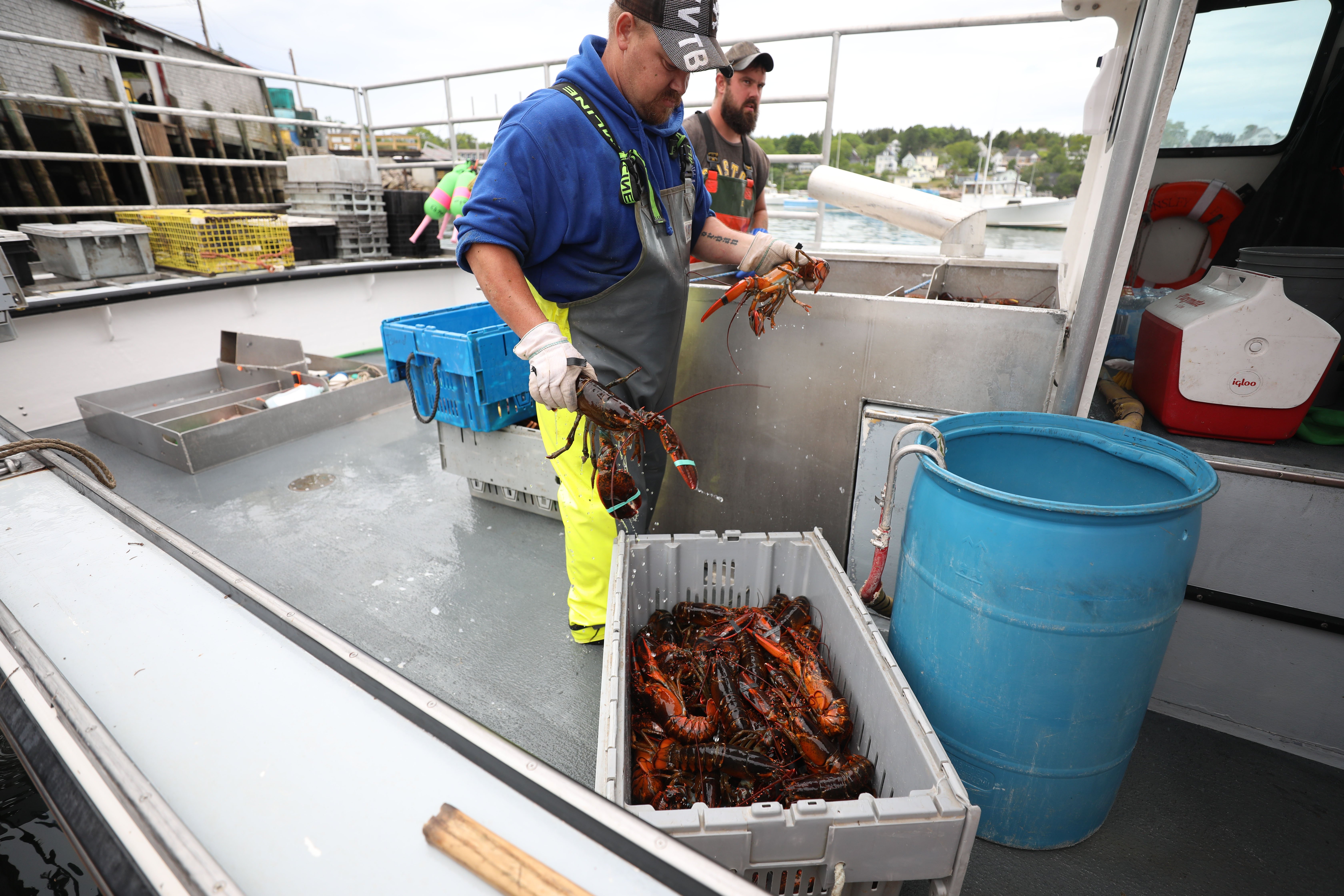
A worker unloads lobsters at the Stonington Harbor, Maine, the United States, June 23, 2018. (Xinhua/Zhang Mocheng)
WHOLE INDUSTRY FEELING PINCH
Massachusetts is the second largest U.S. state in terms of lobster harvest, falling only behind neighboring Maine, which has been hit harder by the trade tensions.
Prior to the trade disputes, China had become the second largest importer of Maine's lobsters. During 2017 -- the last full year before the tariffs went into effect -- Chinese customers purchased 128.5 million dollars' worth of lobsters from Maine, and during the first half of 2018, U.S. lobster exports to China increased by 169 percent, according to a letter signed by all four members of the state's U.S. Congressional delegation.
As U.S. lobster dealers were encouraged by the trend, the tariff hikes kicked in. Maine's lobster exports to China have subsequently plunged 84 percent since China was forced to impose retaliatory tariffs, data released by the Maine International Trade Center earlier this year showed.
"Maine's lobster industry has worked hard to establish markets in China, which they've lost through no fault of their own. Lobsters are a major piece of Maine's economy -- when this industry hurts, Maine people do, too," Senator Angus King of Maine, an Independent, said on Twitter this month.
While the short-term impact is already difficult to endure, many U.S. lobster dealers, including Mortillaro, are worried that their former Chinese customers have forged new business relationships with Canadian lobster dealers and that they would lose their business with China in the long term if not permanently.
"The longer these tariffs go, the more infrastructure they will be putting (up) in Canada, and then it becomes difficult to get the business back," Mortillaro said. "It took a while to develop it, (so) to get it back is gonna take just as long."
He spoke frankly that he had thought a lot about setting up facilities in Canada, but his age, uncertainties in making investments in another country, and difficulties in finding employees and running an overseas business urged him to call it off.
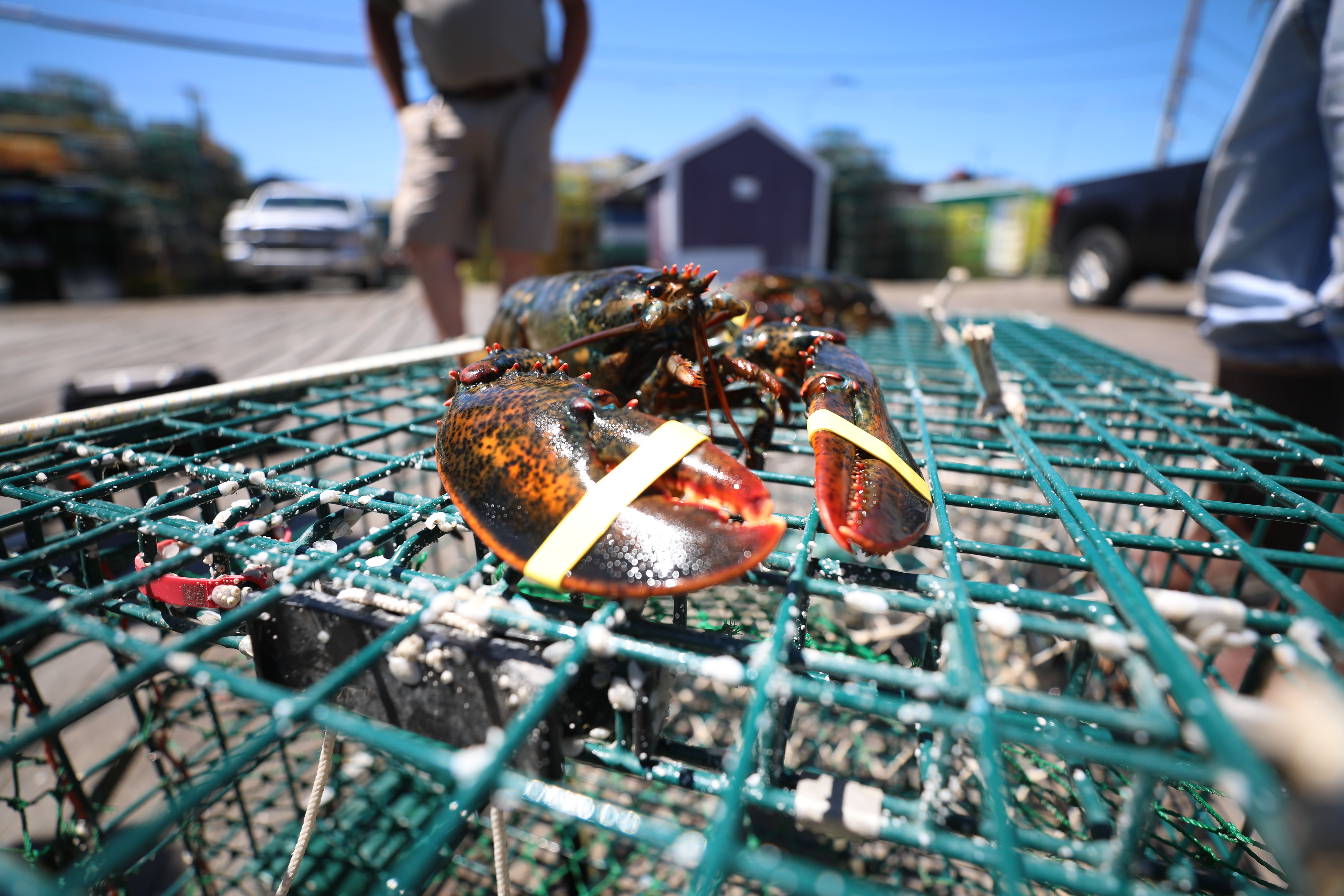
Photo taken on June 22, 2018 shows a lobster in Portland, Maine, the United States. (Xinhua/Zhang Mocheng)
WE NEED EACH OTHER
Ed Smith, a commercial lobsterman in Gloucester, told Xinhua that he believes that the trade tensions between the United States and China are detrimental to both sides.
"I think China's economy is dependent on us and I think our economy is dependent on China," Smith said. "For both economies to grow, I think we need each other."
Speaking of the trade negotiations between the two sides, he said that "it would be mutually beneficial to find some common ground and move forward instead of putting up a fence."
Beijing announced last week that the 12th round of China-U.S. high-level economic and trade consultations will be held on July 30-31 in Shanghai, nearly two months after the last talks in Washington D.C.
Chief trade negotiators of both sides will meet to implement the important consensus reached by the two heads of state in Osaka, Japan, and hold a new round of consultations on the basis of equality and mutual respect, said Gao Feng, spokesman for China's Ministry of Commerce.
Mortillaro, who has followed the trade talks very closely and keeps track of relevant news almost every day, said that his message is that he would like to see an early end to the trade tensions and his business with China go "back to normal," as the Chinese market is too valuable to lose for him and the rest of the U.S. lobster industry.
"Since the establishment of diplomatic ties between the two countries 40 years ago, the two economies have become closely intertwined and highly integrated, benefiting the people of both countries and the world," Gao said.
The so-called "decoupling" of the two economies is hard to imagine, and is something that people from all walks of life in the United States do not want to see, said the spokesman, urging Washington to do more that is truly beneficial to the two countries and their people.
(Video editor: Ma Ruxuan)
