Xinhua Headlines: China's expanding trillion-yuan GDP club highlights economic resilience

* More Chinese cities and provinces crossed key gross domestic product thresholds in 2025, underscoring the country's high-quality regional development and economic resilience.
* Most major provincial economies continued to outpace the national average growth in 2025.
* Major provincial economies are a pivotal force underpinning the national economy and bear the critical responsibility of stabilizing growth.
BEIJING, Jan. 28 (Xinhua) -- Despite global uncertainties and domestic challenges, more Chinese cities and provinces crossed key gross domestic product (GDP) thresholds in 2025, underscoring the country's high-quality regional development and economic resilience.
With China's economy expanding 5 percent year on year to over 140 trillion yuan (about 20 trillion U.S. dollars) last year, cities of Wenzhou and Dalian, fueled by innovation-led transformation and regional revitalization, became the latest to join China's trillion-yuan GDP club, lifting the total number of such cities to 29.
Several major provincial economies also reached GDP milestones last year, reinforcing their roles as leading stabilizers and growth engines of the Chinese economy, and providing further insight into its resilience and high-quality growth.
CITIES CROSS THRESHOLDS
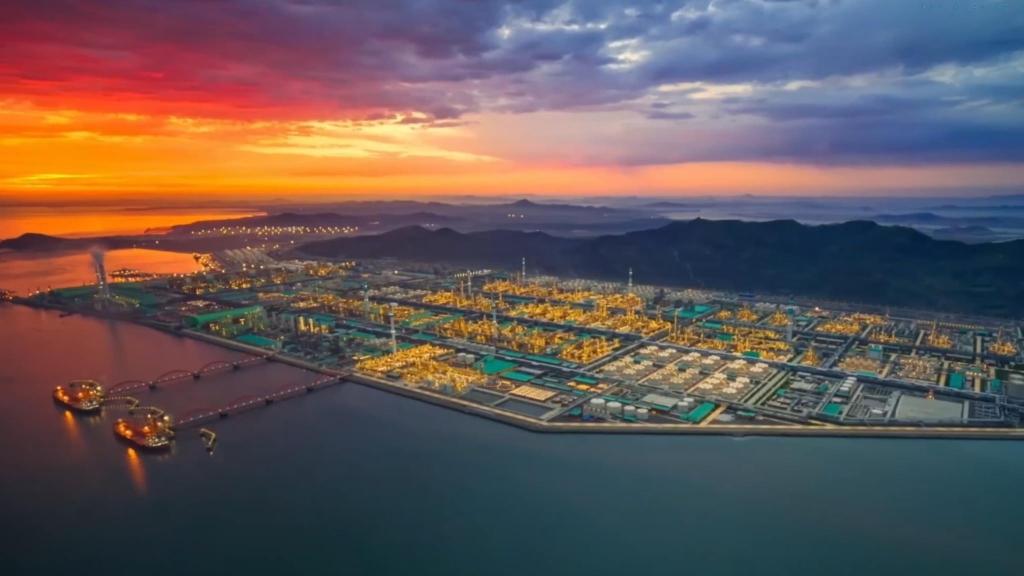
Dalian, a coastal city located in Liaoning Province, became the first city in northeastern China to record GDP above 1 trillion yuan after the local economy expanded 5.7 percent in 2025. The milestone is seen as a confidence boost for the old industrial base of northeast China.
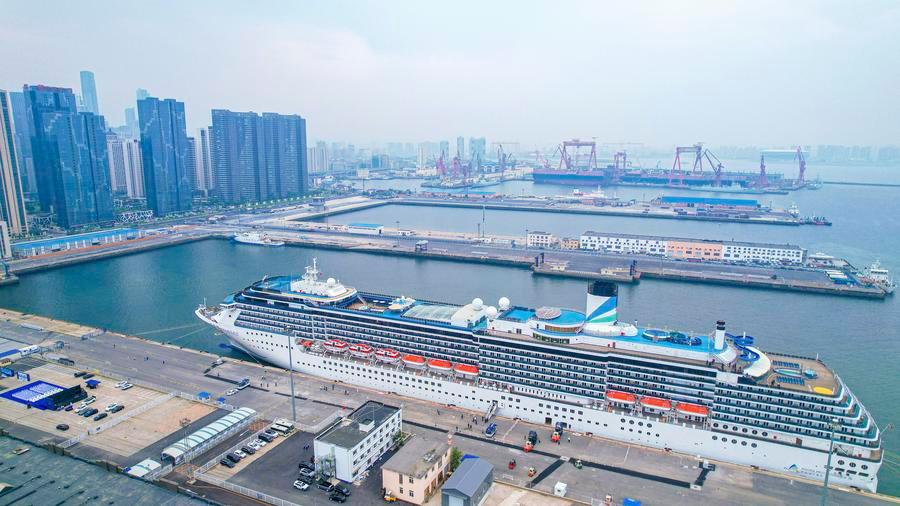
Growth in Dalian was driven both by upgrades in traditional sectors and the rapid expansion of emerging industries. Equipment manufacturing output rose 15.4 percent, while high-tech manufacturing increased by 13.9 percent last year.
"The trillion-yuan mark, unprecedented for northeastern China, can help restore confidence in regional development and inject momentum into the comprehensive revitalization of northeast China," said Zhou Xueren, an expert at Dongbei University of Finance and Economics.
In eastern China, Wenzhou became the third city in Zhejiang Province to join the trillion-yuan club, after its GDP expanded 6.1 percent to 1.02 trillion yuan in 2025.
While upgrading traditional electrical equipment together with the footwear and apparel industries, Wenzhou is also developing new energy, AI, low-altitude economy and health industries.
Wenzhou's shift from heavy reliance on traditional industries toward parallel high-quality growth of new and old growth drivers highlights the importance of scientific innovation in building new competitive edges for development, said Lyu Miao, a researcher at the Yangtze Delta Region Institute of Tsinghua University, Zhejiang.
Since east China's Shanghai became the first Chinese mainland city to exceed 1 trillion yuan in GDP in 2006, the club has expanded steadily to include four municipalities, 11 provincial capitals and 14 other major cities, from the country's coastal east to its west.
Ten of these cities are located in the Yangtze River Delta, one of China's most dynamic economic regions encompassing Shanghai and provinces of Jiangsu, Zhejiang and Anhui.
Shanghai's GDP reached 5.67 trillion yuan in 2025, while Beijing exceeded 5 trillion yuan for the first time.
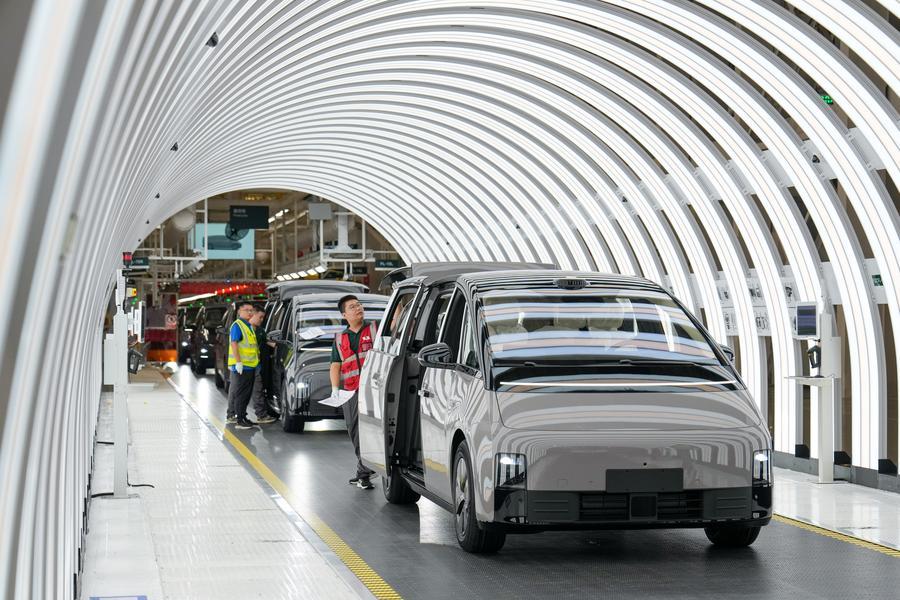
In Shanghai, three leading industries, namely integrated circuits, AI and biomedicine, are major growth drivers. In Beijing, the added value of industrial strategic emerging industries rose 15.5 percent in 2025, with production of new energy vehicles and service robots growing by 1.4-fold and 47.6 percent, respectively.
PROVINCIAL ECONOMIES HIT NEW MILESTONES
At the provincial level, Shandong in east China became the third province after Guangdong and Jiangsu to surpass 10 trillion yuan in GDP, posting growth of 5.5 percent last year.
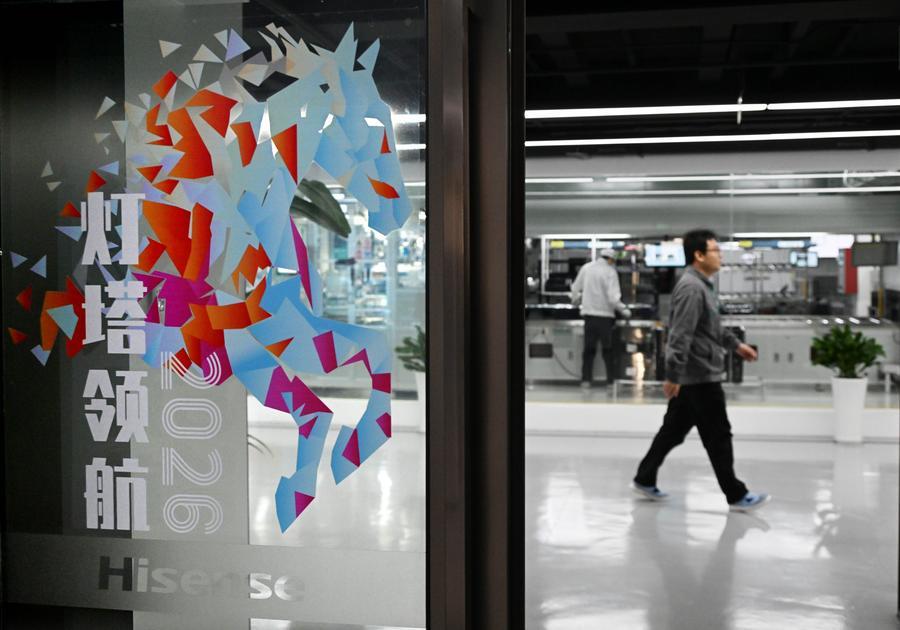
Jigang Group in Shandong's provincial capital Jinan illustrates the province's economic transformation. Once a major steelmaker, the company phased out its steel capacity in 2017 and joined partners in venturing into the aerospace business. It has since built China's largest test base for liquid rocket engines and the only licensed satellite integration and testing base in Shandong.
Gao Fuyi, vice president of the Shandong Academy of Macroeconomic Research, noted that Shandong's industrial structure has moved from a focus on traditional heavy and chemical industries toward high-end manufacturing, strengthening economic resilience and intrinsic value.
Anhui Province, a former traditional agricultural heartland that has emerged as a technology and high-end manufacturing hub, also reported solid growth in 2025. Its GDP increased by 5.5 percent to 5.3 trillion yuan last year.
Industrial output of high-tech manufacturing in Anhui surged 30.4 percent, while production of new energy vehicles ranked first nationwide. Exports of "new trio" products, namely electric vehicles, lithium-ion batteries and photovoltaic products, were a particular bright spot, soaring 110 percent year on year.
Anhui's capital, Hefei, home to new energy vehicle plants operated by NIO, BYD and Volkswagen, has recorded average annual growth of 6.1 percent over the past five years, with strategic emerging industries accounting for 60 percent of total industrial output.
"Hefei is accelerating the commercialization of cutting-edge technologies," said Zhang Chuanchao, deputy director of the Hefei municipal bureau of industry and information technology. In recent years, the city has cultivated future industries including quantum technology, fusion energy and biomanufacturing.
"Emerging and tech industries are the core engines of high-quality economic growth," said Zhang Xianfeng, a professor at Hefei University of Technology, adding that Hefei's development model has become a reference for other regions shifting toward innovation-driven growth.
The Yangtze River Delta is reshaping its development model, with a clear industrial division of labor across the region. Core cities house high-end functions such as R&D and headquarters, while surrounding cities focus on manufacturing and supporting services, according to Zhang of Hefei University of Technology.
ENGINES OF STABILITY, GROWTH
Most major provincial economies continued to outpace the national average growth in 2025, underpinning China's economic fundamentals and propelling its overall economic expansion.
Shanghai and Beijing both grew 5.4 percent, while Shandong, Zhejiang, southwest China's Sichuan as well as central China's Henan and Hubei all posted growth of 5.5 percent or higher.
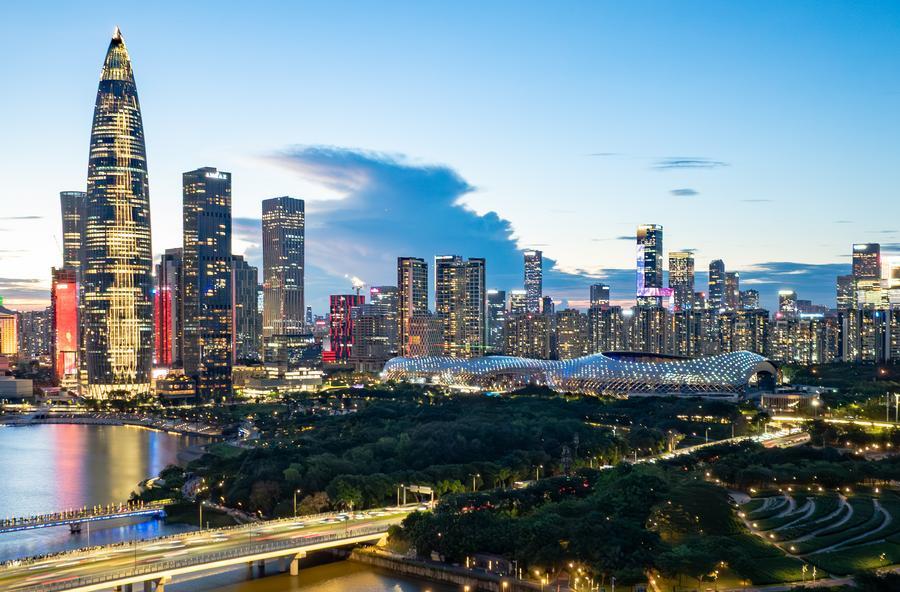
Fujian, in east China, matched the national economic growth rate at 5 percent, with its GDP exceeding the 6-trillion-yuan mark for the first time. Guangdong and central China's Hunan grew 3.9 percent and 4.8 percent, respectively, last year.
The Central Economic Conference held in December 2025 called for supporting major provincial economies in assuming greater responsibility and enhancing innovation-driven development to accelerate the cultivation of new growth drivers.
"Major provincial economies are a pivotal force underpinning the national economy and bear the critical responsibility of stabilizing growth," said Chen Lifen, a researcher at the Development Research Center of the State Council.
These regions can drive growth through stabilizing investment, consumption and exports, and ensure smooth industrial and supply chains to be a major contributor to the country's economic growth, Chen explained.
Meanwhile, such powerhouse regions can also help boost the growth of neighboring regions to narrow regional disparities to achieve common prosperity, Chen added. ■
(Video reporters: Ding Ting, Chen Jie, Di Chun, Sun Qing, Cui Li, Wang Yiwen, Li Tao, Gao Ming, Han He, Liu Bin, Jiang Zhaochen, Li Xiaobo, Feng Yuanyuan, Wu Feizuo, Luo Hao, Xia Peng, Zhu Xiao; video editors: Yu Jiaming, Li Qin, Zhu Cong)










Comments